

Disease · Wheat, garlic and bean
Rust: the warning from the first patches
Puccinia striiformis (wheat), Puccinia allii (garlic), Uromyces appendiculatus (bean)
From the field edge, rust shows up late. Flying lets us check the whole field, which is impossible on foot, and mark for you the areas with symptoms.
We have not flown this problem ourselves yet. We work it out with you, on your field.
The problem
It starts in patches, then follows the wind
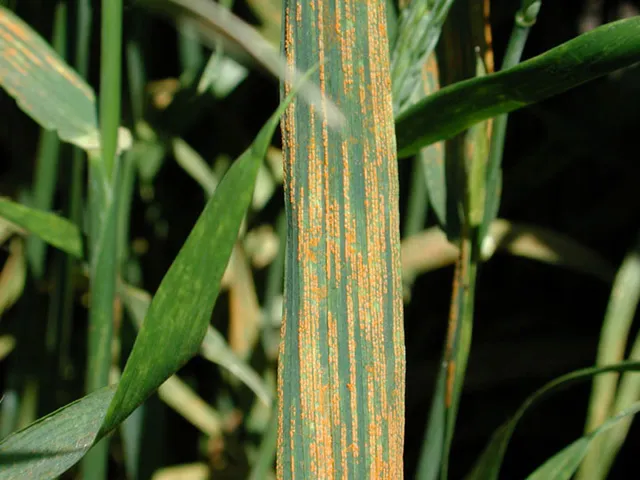
Rust is a fungus that forms orange, yellow or brown pustules on the leaf. In wheat, yellow rust (stripe rust) shows as stripes along the leaf and starts in patches that turn yellow.
Its spores travel on the wind, so from one patch it reaches the rest of the field in a short time. In wheat, the patch is not treated on its own: it is the warning to treat the whole field in time, before it climbs to the top leaves.
How it works
A flight at the moment of risk
1
We fly low
In wheat, from tillering to stem extension depending on the year; earlier if there are rust alerts in your area. In garlic, in spring, in mild, damp weather.
2
We alert you
A map of the patches with their position. If any are visible from above, you find out early and can go and check them.
3
You treat in time
In wheat, the whole field at the right moment. In garlic and bean, starting with the areas with the most rust.
Where it shows up
Where it shows up
- Wheat
- Garlic
- Bean
It is also found on oats, maize and asparagus, each with its own rust; barley has its own yellow rust too.
What farmers ask us
Rust: your field questions
When I see it, I treat everything. What is the map for?
To check the whole field and not just what you see from the field edge. The difference is the days you gain: a patch seen early is stopped with a treatment in time; seen late, it has already climbed to the flag leaf, the one that fills the grain.
Does the variety matter?
A lot. There are more resistant varieties, though some new rust races break that resistance. If a field has patches every year, the map helps you decide on a change.
Which fungicide should I use?
It depends on the crop, and what is authorised changes from year to year. Before you spray, check in your country’s official pesticide register that the product is approved for your crop (in the UK, the HSE register of authorised products; in the US, the label registered with the EPA and your state), or ask us. We do not recommend products.
Know someone this would help?
Send them this page. If they have rust in their fields, you save them some searching.