

Hybrid seed corn (seed maize)
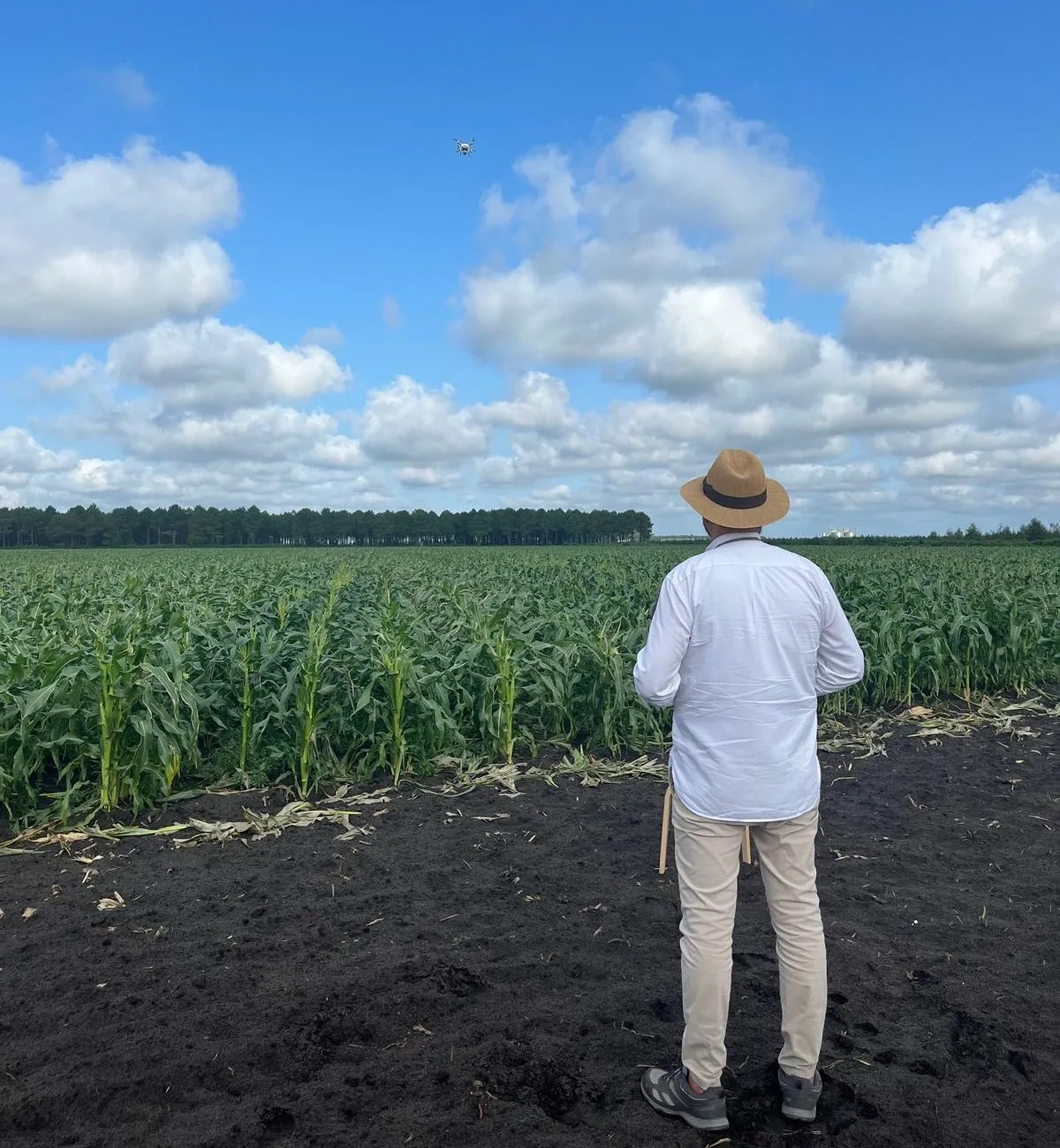
Seed corn detasseling: the drone finds the tassels left behind
The detasseling machine always leaves a few tassels. We tell you where each escaped tassel is, before it sheds pollen.
We do not fly in the US yet, and there is no seed maize production in the UK. If you grow seed in the US or in Europe, write to us and we will tell you how we can work on your fields.
The problem
One tassel that escapes is seed that fails the standard
After the machine there are always tassels left standing in the female rows: plants that grew late, tillers, or tassels the cutter did not reach. From the field edge you cannot see them. Every female plant that sheds pollen pollinates its neighbours with its own pollen, and that seed is no longer the hybrid your seed company asked for.
What the rules say
Seed certification allows very few pollen-shedding plants in the female rows. The limit depends on the certifying body and on your contract. In Spain, for example, a field with more than 1% of female plants shedding pollen in one inspection, or more than 2% over three inspections, is not accepted as seed.
Spanish technical regulation for the control and certification of maize seed (Orden ARM/3369/2010), detasseling section. Check the limit that applies to you.
How it works
Between the machine and the walk-through
1
The machine passes
You detassel as usual. We fly the field right after, before the walk-through.
2
We fly low
From very close you can see every tassel left standing, even when it is hidden among the leaves.
3
We send you the map
Every tassel with its position and photo. The crew goes straight to each one with a phone.
A real job
Fifty tassels that escaped
On a seed field, the flight flagged fifty possible tassels still standing after the machine; for twenty-six, the confidence is 70% or more. Click a marker and you will see the photo of that plant.
Purer seed
You remove the tassel that would shed its own pollen, before it does.
You know where you stand
Before the inspection you know how many tassels are left and where.
The right crew
You size the crew to how many tassels there are and where, so the walk-through goes where it is needed, not over the whole field.
Fewer broken plants
Nobody has to walk every row.
See the map full screen. Aerial background: © IGN (France). The location and the client are not shown.
The words of the trade
Detasseling, castration, tassel
Detasseling (detasselling)
The common word, in the US and in most searches: removing the male part of the female plants.
Castration
What the trade calls it in much of Europe, for the same job.
Tassel
The male part of the maize plant, at the top.
Female rows, male rows
Only the male rows should supply the pollen. Making sure of that is the grower’s job.
It is the same job: removing the male part of the female plants so that only the pollen from the male rows fertilises them. What we look at is what is left afterwards.