About us
An agronomist, not a platform
Behind Tres60 analytics there is a person who analyses your fields and signs the recommendation. Not a form that sends back a PDF. An independent agronomist: we sell no fertiliser and no pesticides.
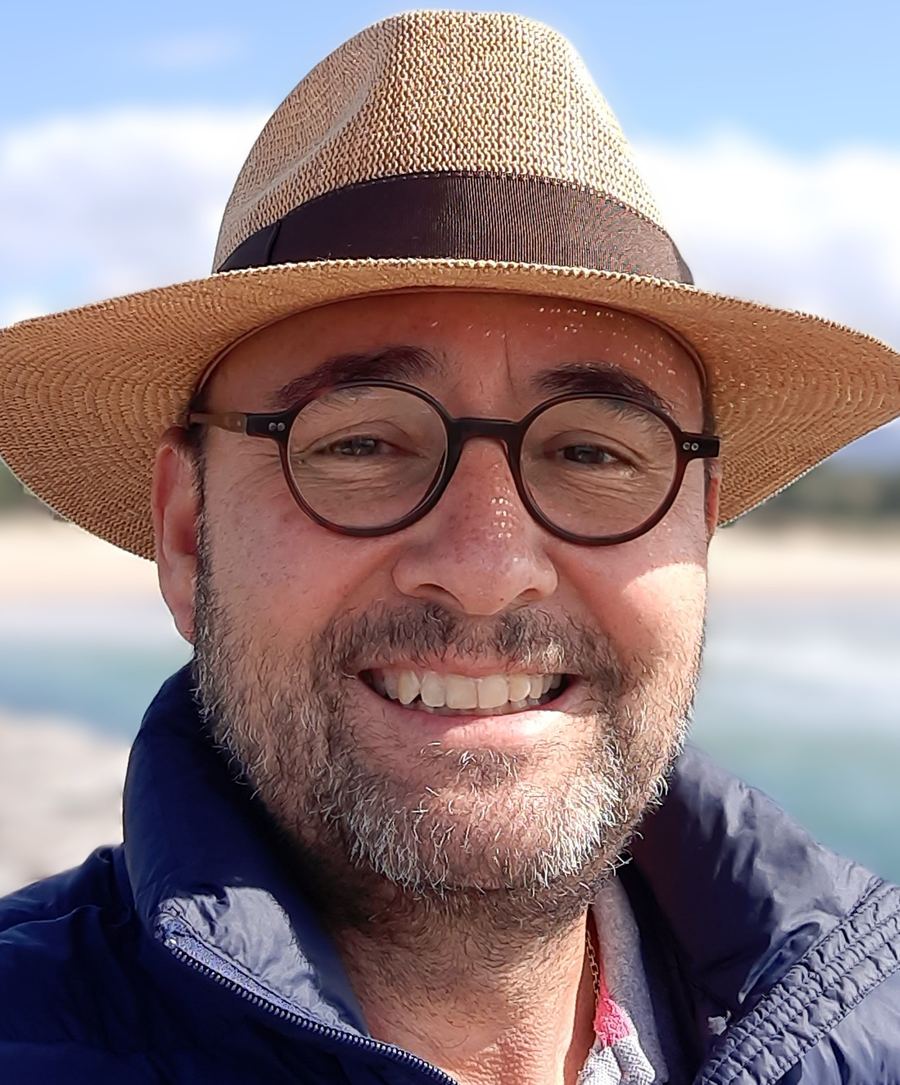
Luis José Valdez
I am an agronomist, a graduate of the Universidad Nacional Agraria La Molina in Lima, Peru. I have worked in farming since 1995, and in those thirty-one years I have been on both sides of the table: I have managed table grape farms, co-founded a vineyard that is still in production, run the agricultural information service of a ministry and set up a precision agriculture consultancy.
In 2023 I finished a university postgraduate diploma in new technologies for precision agriculture at thePublic University of Navarre (UPNA), in Spain. Since then I have worked on this full time, from Pamplona, where I have lived since 2021.
I have seen a lot of fields, and what comes up most often is that the grower fertilises out of habit, at the field average, when their own analysis is saying something else. And every season it is the same: fertiliser and diesel go up faster than crop prices. The margin gets squeezed.
Why I set up Tres60
Nobody was bridging the gap between the lab and the plant
The lab analysis says what is in the soil. It does not say what the plant will be able to take up. Between the two sit pH, lime, the soil’s capacity to hold nutrients and the competition between them: twelve factors that change the result completely.
Some of the nutrients your crop takes up do not come from you: they are released by the microbiome (what lives in your soil). If it is sluggish or poor, you pay for everything. A routine analysis does not measure it. We do, and when we measure it, it goes into the calculation.
Nobody was bridging that gap. The analysis was handed over as it came and the grower made do with a general table. I set up Tres60 to do that calculation properly, with the numbers of each field.
How we work
Three things we do not compromise on
The numbers come from your field
Recommendations are not copied from a fertiliser guide: they are calculated from your soil analysis, your crop and the yield you are aiming for.
A report you cannot understand is worth nothing
If you cannot question a recommendation, you can only obey it or ignore it. So the report explains the why of every point in plain terms.
If you do not need to fertilise, we tell you
It may sound odd coming from someone who makes a living from this. But that is exactly the job: telling you what you do not need.
What is behind the report
The calculation is ours
The tool that works out the balances was built by us and we review it every season. It is not a spreadsheet doing simple proportions: it takes into account what the soil locks up, how nutrients compete with one another and how much of what you apply actually reaches the plant.
That is why two fields with the same analysis can end up with different plans.