

Water and soil · Citrus, almond, maize and irrigated crops
Salinity: where salt holds the crop back
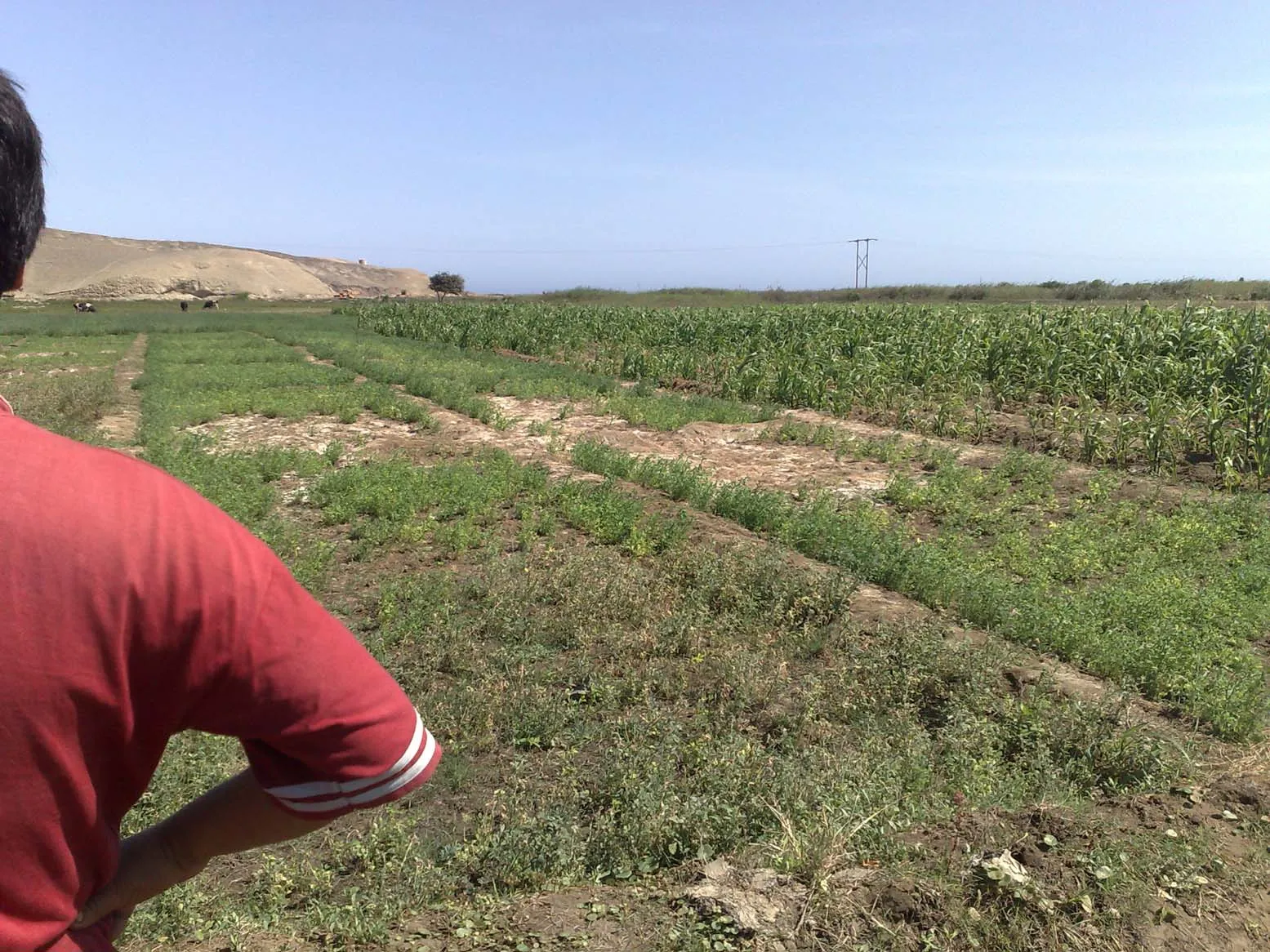
Salt does not show on the plant until it holds it back. We fly and mark the low-vigour patches, so you can measure the salt in soil and water right there.
We have not flown this problem ourselves yet. We work it out with you, on your field.
The problem
Salts that build up where water does not flush them out
A soil is saline when its electrical conductivity, measured in the laboratory on a saturated paste, is above 4 dS/m. The plant grows less, the leaf edge scorches and, in severe cases, it thins out or dies. The most sensitive crops already suffer at much lower values.
Salt builds up when you irrigate with poor-quality water, when irrigation or drainage fails, and in soils that drain badly. It can also rise with a shallow water table in coastal land.
How it works
A flight to know where to measure
1
We fly
With the crop well developed, when the low-vigour patches stand out.
2
We send you the map
Low-vigour or sparse zones. A standard camera does not measure salt: it says where to sample.
3
You measure and correct
Soil and water samples in those zones. If there is salt, extra irrigation with good water to leach it, and good drainage.
To know whether you are leaching well, sample at three or four depths and compare the average with what the crop tolerates.
Where it shows up
Where it appears
- Citrus
- Almond
- Apricot
- Maize (corn)
Almond, apricot and citrus are among the most sensitive to the chloride and sodium in sprinkler irrigation water. Elsewhere it is mostly a matter of irrigation: salty water or poor drainage is enough.
What farmers ask us
Salinity: field questions
At what salt level does my crop suffer?
It depends on the crop. The 4 dS/m threshold defines a saline soil, but sensitive crops suffer well before it. Before interpreting a test, ask your adviser for the threshold of your crop.
How do you remove salt?
By applying good-quality water to leach it downwards, with good drainage so that it leaves. Without drainage, the salt comes back; and without good water, you cannot leach it.
Does the drone measure salt?
No. It marks the zones that grow worse. Salt is measured with soil and water samples or with a conductivity sensor in the field.
Know someone this would help?
Send them this page. If they have salinity in their fields, you save them some searching.