

Pest · Strawberry
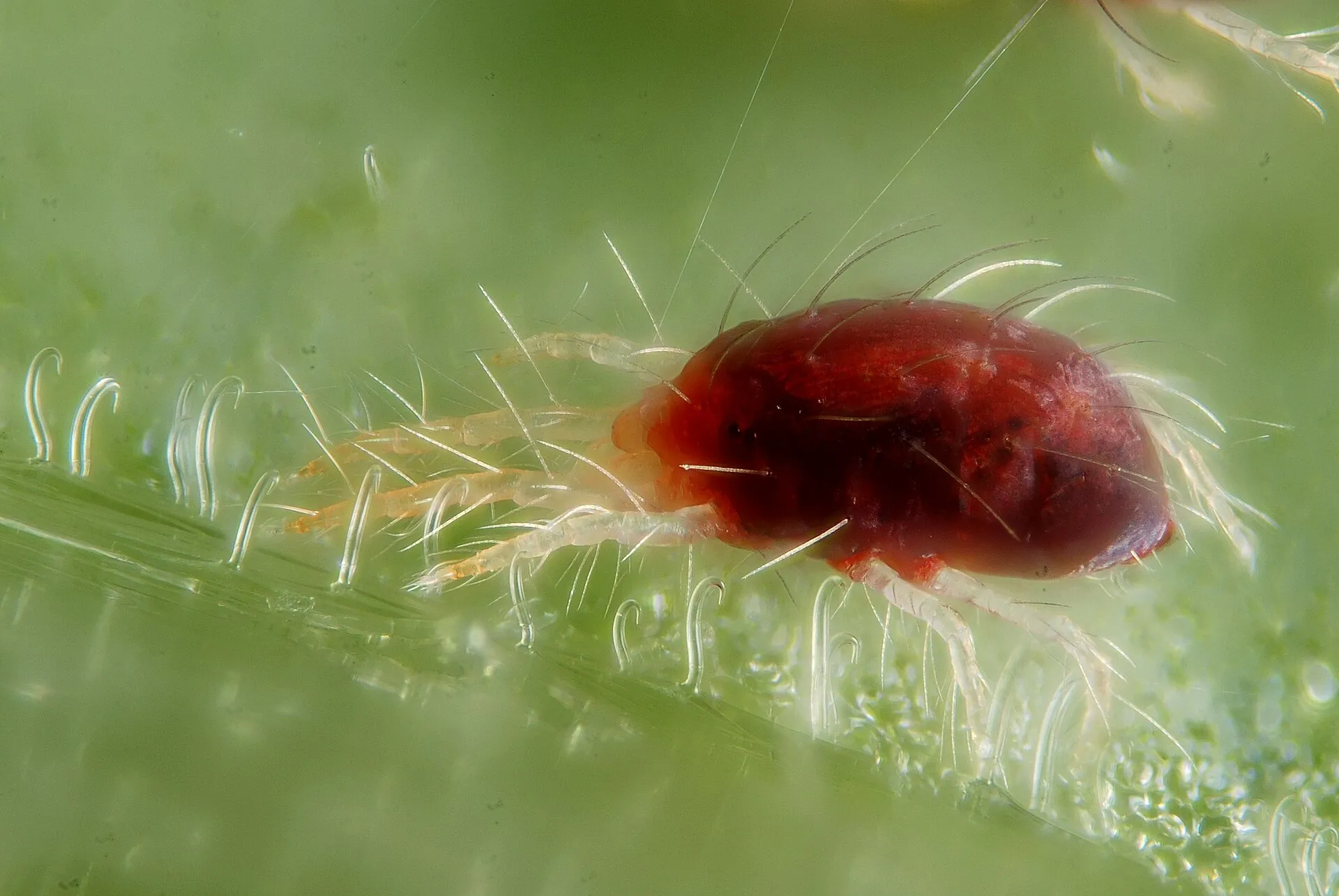
Red spider mite: where to look with a hand lens
Tetranychus urticae
A tiny mite that lives under the leaf and starts in patches. We fly the crop and mark the damaged zones, so you can check them with a hand lens.
We have not flown this problem ourselves yet. We work it out with you, on your field.
The problem
A mite you cannot see with the naked eye
It feeds on the sap from the underside of the leaf. First a yellow stippling appears; then the leaf turns bronze and webbing forms. In a heavy attack the plant stays small, dries out and turns reddish.
Numbers explode when its natural enemies are missing, for example after some broad-spectrum insecticides, when dust from tracks settles on the plants, and when the plant is weak from lack of water or poor nutrition.
How it works
A flight to know where to look
1
We fly the crop
When there are already bronzed or dry leaves somewhere. Releases of predatory mites are decided earlier, with the hand lens.
2
We send you the map
The zones with damaged leaves, with their position. With a standard camera we only see advanced damage, and it can be mistaken for lack of water.
3
You check with a hand lens
The count under the leaf decides whether to release predatory mites or spray. The map tells you where to start.
Where it shows up
Where it appears
- Strawberry
Releases of predatory mites are timed to the first patches.
What farmers ask us
Red spider mite: field questions
Why does the pest explode after spraying?
Because some insecticides also kill the mite’s natural enemies. It is better to choose products that spare them.
When do I release predators?
From the first patches, or earlier if you rely on prevention. The right moment depends on the predator species and the season: ask your adviser.
Does the drone see the mite?
No. It sees the damage on the leaf once it is noticeable. What decides is the hand lens under the leaf.
Know someone this would help?
Send them this page. If they have red spider mite in their fields, you save them some searching.