

Disease · Peach and almond
Peach leaf curl: by the time you see it, it is too late
Taphrina deformans
The curled, reddish leaf shows in spring, but by then you can no longer treat. The damage map helps you protect better next year.
We have not flown this problem ourselves yet. We work it out with you, on your field.
The problem
A fungus that hides in the buds
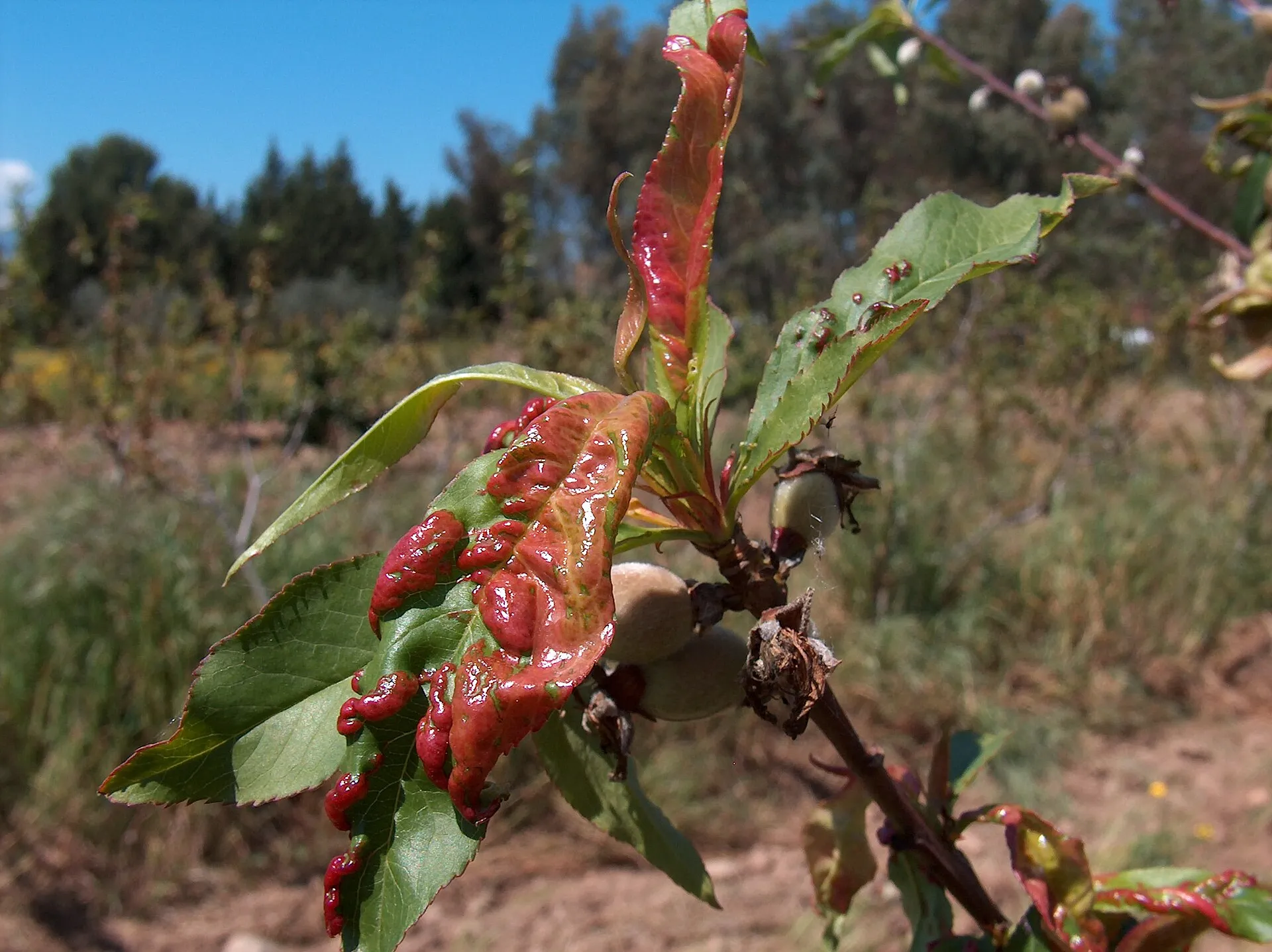
It is the same disease on peach, nectarine and almond. Spring leaves come out thickened, blistered, curled and reddish or yellow. They fall in early summer and, if it repeats every year, the tree weakens and branches dry out.
The fungus spends summer and winter in the bark and the buds. It infects the young leaf when bud break coincides with rain and cool weather.
How it works
A flight in spring
1
We fly after bud break
When the curled, reddish leaves can already be told apart in the canopy.
2
We send you the map
The most damaged trees and areas, with their position.
3
You adjust the protection
Protection goes on before bud break, at leaf fall or with swollen buds. The map shows where to keep at it next year.
Where it shows up
Where it shows up
- Peach
- Almond
What farmers ask us
Leaf curl: your field questions
When do you treat?
Before bud break: at leaf fall or with swollen buds. Once the leaf is curled, nothing can be rescued that year.
Does it come back every year?
Yes, if bud break coincides with rain and cool weather, because the fungus stays in the buds and the bark.
Does removing the diseased leaves help?
Removing leaves and fruit does not help control it. It is better to prune so air moves through the canopy and not to overdo the nitrogen.
Know someone this would help?
Send them this page. If they have peach leaf curl in their fields, you save them some searching.