

Weed · Maize (corn) and cotton
Palmer amaranth: find the escapes before they set seed
Amaranthus palmeri
One plant that goes to seed can fill a field for years. We map the plants that stand above the crop, so you get to each one before the seed head is ripe.
We have not flown this problem ourselves yet. We work it out with you, on your field.
The problem
It outgrows the crop and leaves a seed bank
Palmer amaranth is a summer annual of hot weather. It can grow 5 to 8 cm (2 to 3 in) a day in good conditions, rises above the crop canopy before flowering and, in corn (maize), can reach 2.1 to 2.4 m (7 to 8 ft). A plant that competes with the crop typically produces about 250,000 seeds; growing alone, up to 500,000.
The bigger problem is resistance. Most populations are resistant to glyphosate and to ALS herbicides, and in some southern US states it has shown resistance to four more groups. That is why extension services call it a zero-tolerance weed: one plant is too many. It also travels: with combines and other machinery, with feed and seed, and with manure from animals fed on contaminated feed.
How it works
A map of what stands above the crop
1
We would fly when it overtops the crop
Palmer amaranth grows above the canopy before it flowers. That is the moment it shows from above, and the last chance to reach it before seed set.
2
You get the map
Each plant or patch rising above the crop, with its position. We do not tell Palmer amaranth from other pigweeds from the air; you check each one on foot (see the questions below).
3
You remove it before it sets seed
With the position on your phone, whoever walks the field goes straight to each plant. Pull it out of the field: a plant left on the soil can take root again and still set seed.
From above you see the plants that have already outgrown the crop, not the seedlings. For small plants the field walk is still the tool; the flight tells you where to look afterwards, in the middle of the field and at the borders.
Where it shows up
Where it hurts
- Maize (corn)
- Cotton
In the south of the US it is among the worst weeds of cotton and soybean, and it has now been confirmed in Midwest states such as Indiana, Michigan, Ohio and Illinois. Ditches and field edges matter as well: plants there do not compete with the crop but still spread seed and pollen.
What farmers ask us
Palmer amaranth: your field questions
Do you fly in the US?
Not yet. In the US a local licence is needed and we do not have it, so we do not fly there. Write to us and we will tell you how we can work on your farm. What we do from anywhere is read your soil test and zone your field with satellite data.
How do I tell it from other pigweeds?
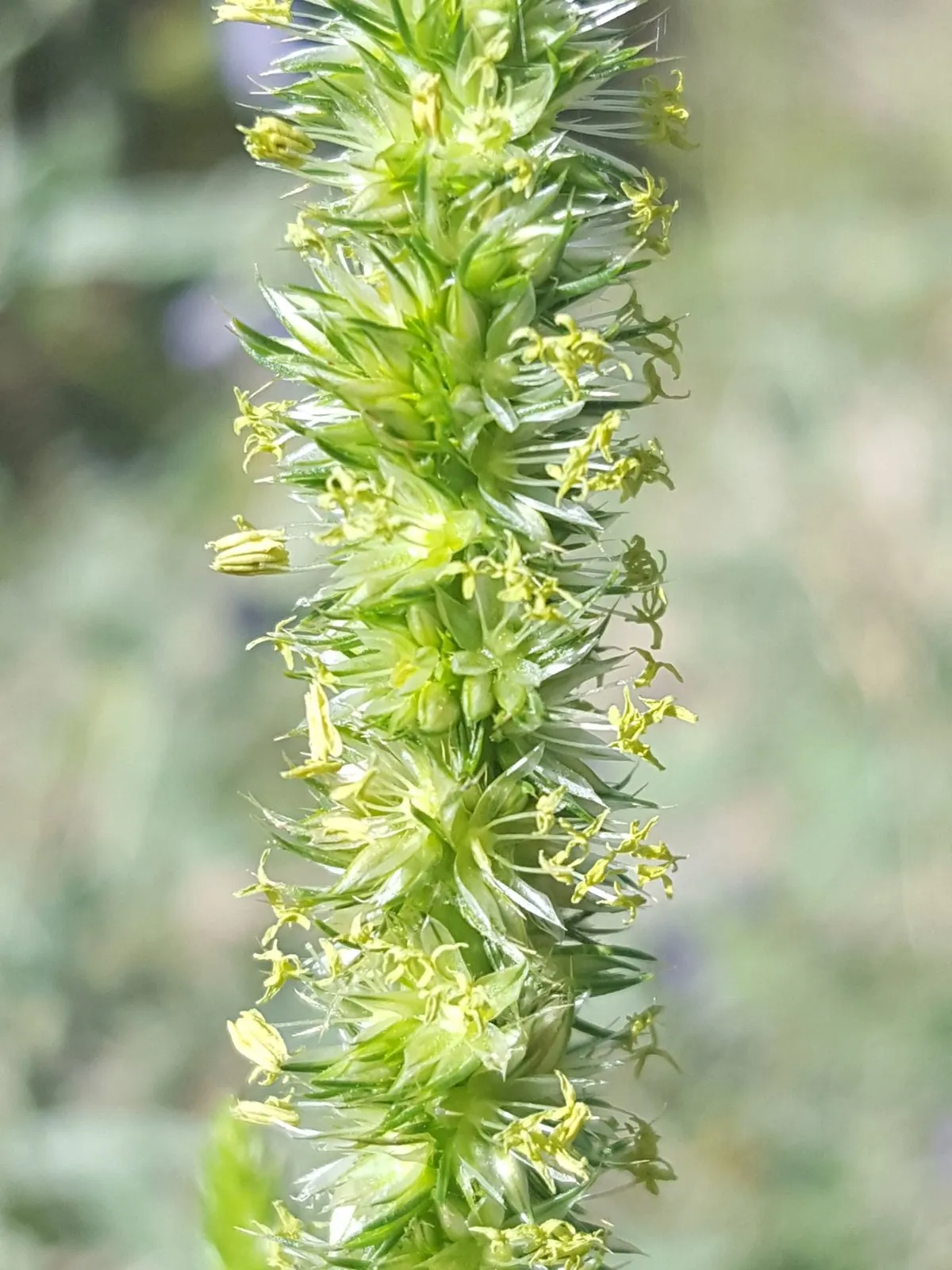
On foot. Palmer amaranth has completely hairless stems and leaves, and its leaf stalks are as long as or longer than the leaf blade. Its seed head can reach 60 cm (2 ft). Small plants are hard to tell from waterhemp: confirm with your local extension service if in doubt.
Can the drone tell Palmer amaranth from waterhemp?
We do not claim that. From above we see a tall plant above the crop; the species is confirmed on foot. We would fine-tune what we can read with you on your own field.
Which herbicide should I use?
It depends on the crop, and what is authorised changes from year to year. Before you spray, check in your country’s official pesticide register that the product is approved for your crop (in the UK, the HSE register of authorised products; in the US, the label registered with the EPA and your state), or ask us. We do not recommend products.
Does the drone spray?
No. We do not spray: the drone makes the map. Treatment is up to you, with your own ground equipment.
Know someone this would help?
Send them this page. If they have palmer amaranth in their fields, you save them some searching.