

Weed · Maize (corn), sunflower, asparagus and more
Johnsongrass: treat only the patches
Sorghum halepense
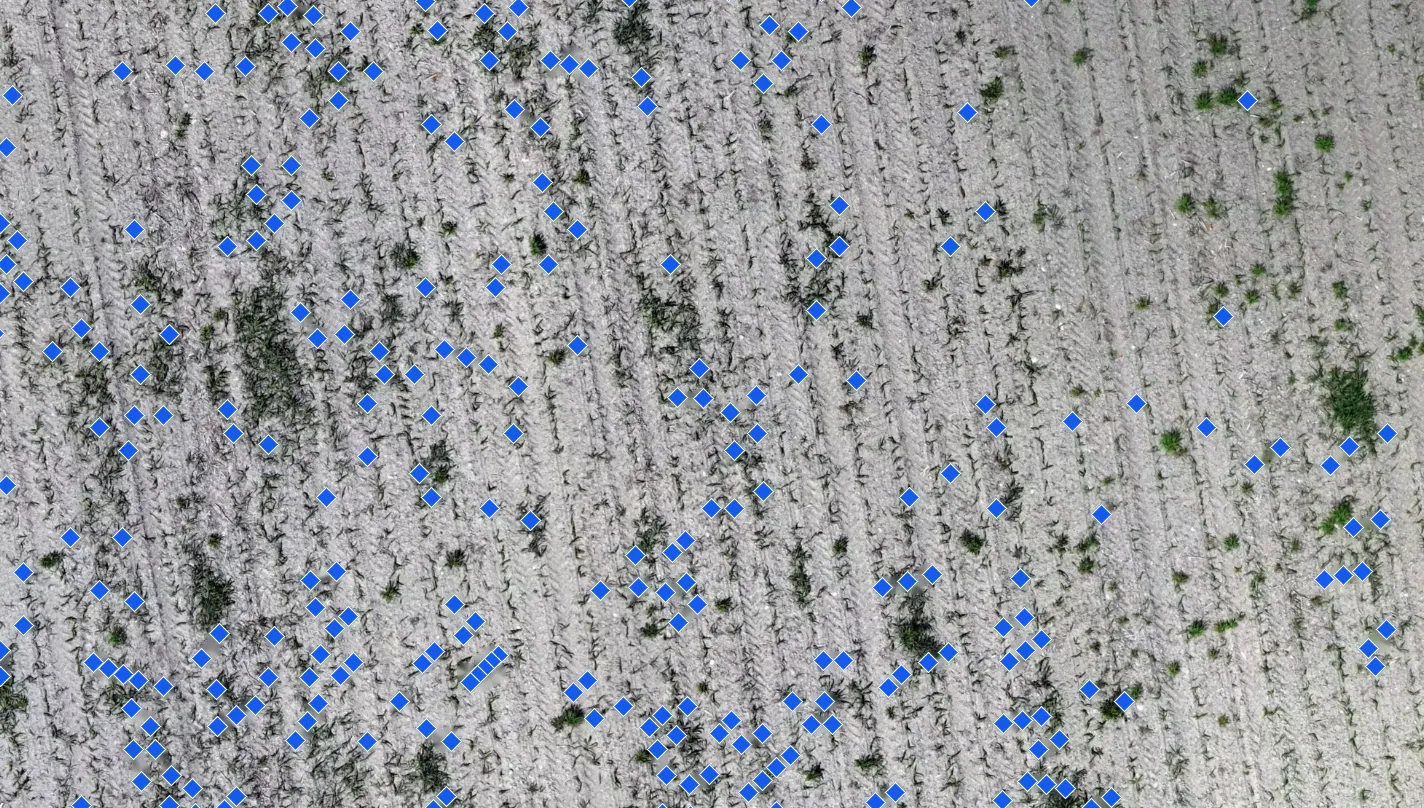
Johnsongrass grows in patches, but the whole field often gets sprayed. We fly before the herbicide and tell you where each patch is, so the product goes only there.
The problem
A few patches, and the whole field gets sprayed
Johnsongrass is a perennial grass that grows in patches. It competes with the crop for water, light and nutrients right where it grows. From the field edge you cannot tell how much there is or where, so the usual answer is to spray everything: you pay for product on hectares that do not need it.
And the window is short. In maize, the herbicide goes on while the maize is young and the Johnsongrass still small. The exact stage depends on the product, so your label has the last word. After that, the crop closes over the rows and you can no longer see a thing.
How it works
One flight before the herbicide
1
We fly at the right time
In young maize, just before the herbicide window, when the Johnsongrass already stands out.
2
We send you the map
Each patch with its position and the hectares (acres) they add up to. You know how much product you need before you fill the sprayer.
3
You treat only there
With your sprayer or a knapsack, on the patches and not on the whole field.
Because patches tend to come back in the same place, the map is not thrown away at the end of the season: next year it shows whether each patch is growing or shrinking.
Where it shows up
Not only in maize
- Maize (corn)
- Sunflower
- Asparagus
- Alfalfa
- Tomato for processing
- Cotton
- Artichoke
The best time to fly changes with the crop: in asparagus, after harvest while the fern is still young; in sunflower, before the crop closes over the rows. We tell you once we have seen your field.
What farmers ask us
Johnsongrass: your field questions
Why does it come back to the same place every year?
Because it survives underground. Johnsongrass has rhizomes, stems below the soil that store reserves and regrow every spring. That is why the patch appears where it was.
Why does ploughing (plowing) not get rid of it?
The implement cuts the rhizomes into pieces, and every piece can grow a new plant. It also drags them along, so a patch stretches in the direction you work the soil.
Which herbicide should I use?
It depends on the crop, and what is authorised changes from year to year. Before you spray, check in your country’s official pesticide register that the product is approved for your crop (in the UK, the HSE register of authorised products; in the US, the label registered with the EPA and your state), or ask us. We do not recommend products.
Does the drone spray?
No. We do not spray: the drone makes the map. Treatment is up to you, with your own ground equipment.
Know someone this would help?
Send them this page. If they have johnsongrass in their fields, you save them some searching.