

Deficiency · Vines and fruit trees
Iron chlorosis: chelate only where it is needed
Iron chelate is expensive. We fly in spring and tell you which trees and zones are yellow, so you apply it there and not across the whole farm.
We have not flown this problem ourselves yet. We work it out with you, on your field.
The problem
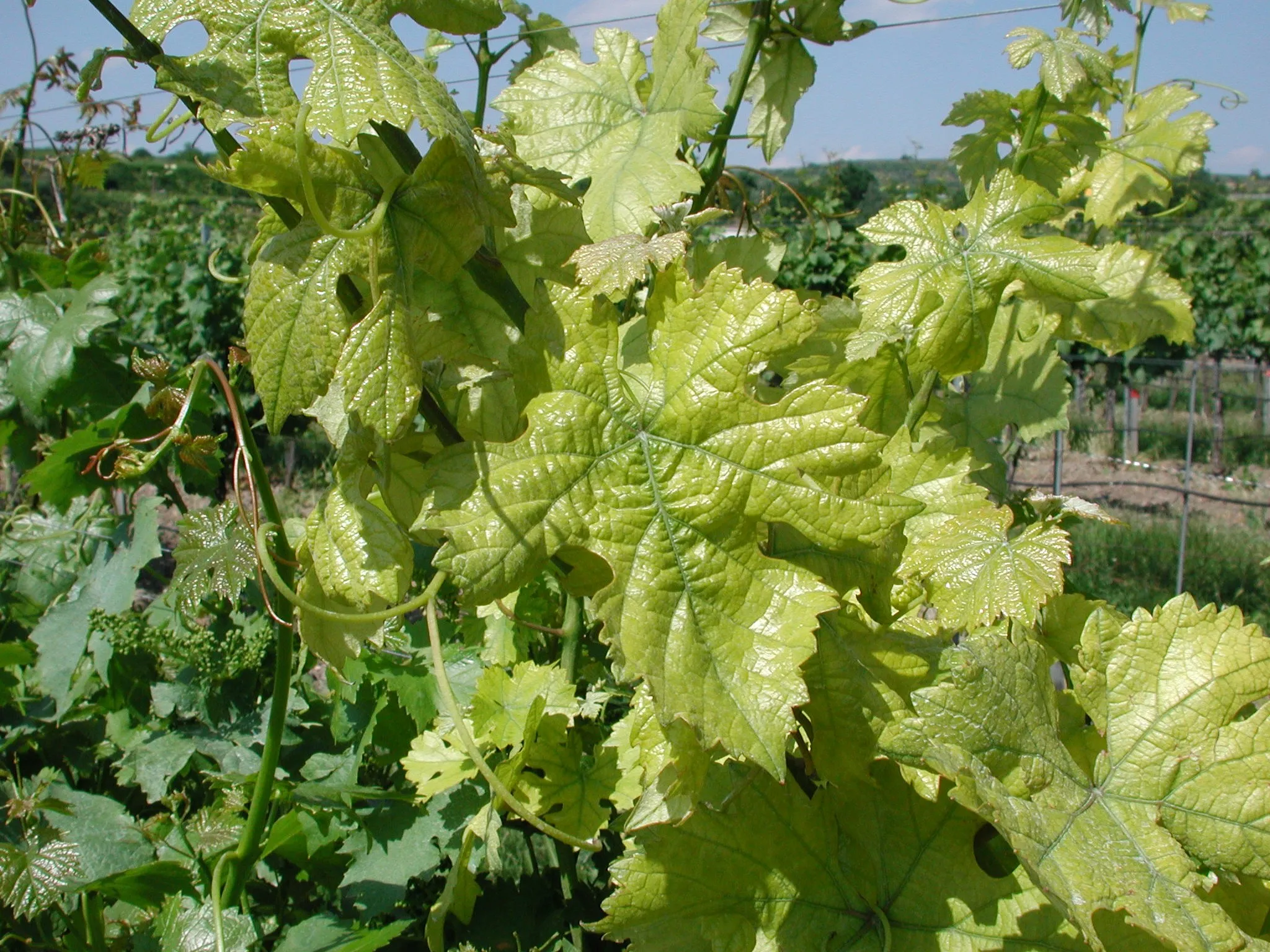
Yellow leaves with green veins
In iron chlorosis, the new leaves come out yellow with green veins. Almost never is iron missing from the soil: in soils with a lot of active lime (the finest fraction of the limestone) and a high pH, the plant cannot take it up. Waterlogging makes it worse, and so does a long drought.
That is why it appears in patches that follow the soil and repeat every year. Treating the whole farm the same means paying for chelate for trees that do not need it.
How it works
A flight at shoot growth
1
We fly in spring
After bud break, when the new leaves turn yellow and there is still time to act.
2
We send you the map
Each yellow tree or zone, with its position.
3
You apply only there
The chelate goes to the trees with the symptom. Nothing spent on the rest.
As the patches come from the soil, the map stays valid from one year to the next and helps choose the rootstock if you replant.
Where it shows up
Where it appears
- Blueberry
- Grapevine
- Citrus
- Peach
- Apple
- Almond
- Cherry
- Olive
It is common on limy (calcareous) soils, in vines as in fruit trees. It also hits blueberry, which needs an acid soil: it shows up as soon as the soil pH rises or the irrigation water carries bicarbonate.
What farmers ask us
Chlorosis: field questions
If I apply chelate every year, what is the map for?
To put it only where it is needed. The patches are often only part of the farm, not all of it.
Is it always iron?
Not always. Other deficiencies also yellow the leaf. The map says where to look; a leaf or soil test confirms it.
Can the soil be corrected?
In a limy soil it is very hard to lower the pH, and it is usually not worth it. You manage it: tolerant rootstocks when planting, good drainage and chelate where needed.
Know someone this would help?
Send them this page. If they have iron chlorosis in their fields, you save them some searching.