

Disease · Grapevine, lettuce, onion, cucurbits
Downy mildew: the first patches, in time
Plasmopara viticola (grapevine), Bremia lactucae (lettuce), Peronospora destructor (onion), Pseudoperonospora cubensis (cucurbits), Hyaloperonospora brassicae (broccoli)
Downy mildew moves fast, but it does not start everywhere at once. We fly after the rain and tell you where the first patches have appeared.
We have not flown this problem ourselves yet. We work it out with you, on your field.
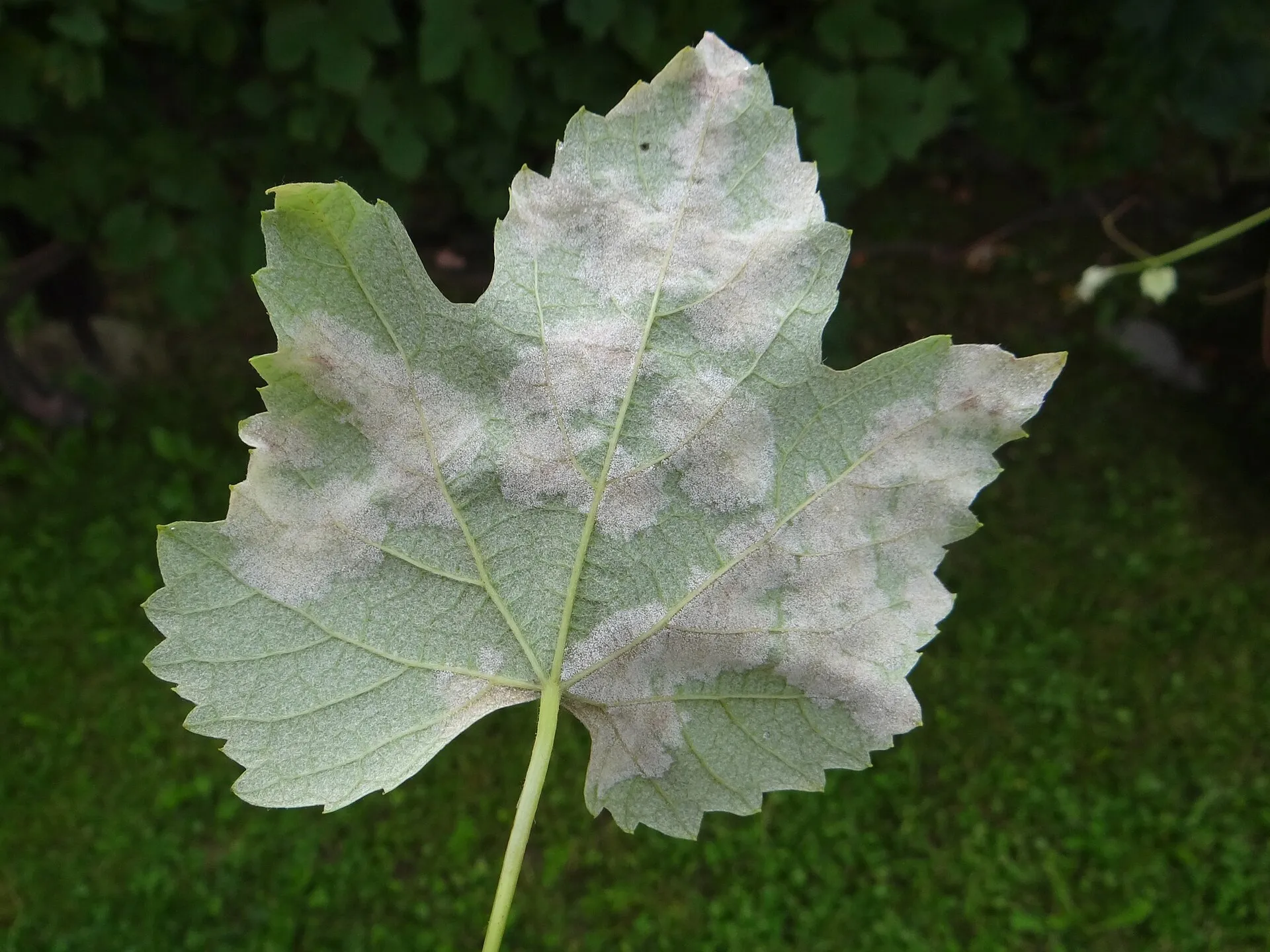
The problem
It starts in one corner and within a week it is everywhere
Downy mildew is a disease of wet weather: rain, dew or fog with mild temperatures. Oily-looking spots appear on the leaf and, underneath, a whitish mould. It often starts in the areas that hold the most moisture, such as hollows or shaded edges.
Because it spreads fast, the usual practice is to spray everything as a preventive. That does not change. What the map adds is knowing where it started and whether the treatment has slowed it.
How it works
A flight after the rain
1
We fly after the risk
A few days after rain or dew in mild, warm weather, when the spots are already visible. What the map shows is confirmed at plant level.
2
We send you the map
Each patch with its position. You see whether they are scattered points or an area that comes back.
3
You act there first
You treat the affected areas first and check on the next flight whether they have stopped.
The areas where it starts are often the same every year. With two or three flights you know which they are.
Where it shows up
One name, several diseases
- Grapevine
- Lettuce
- Onion
- Broccoli
- Courgette, melon and cucumber
Each crop has its own downy mildew, caused by a different organism, but they all behave alike: moisture, patches and fast spread. On tomato and potato the equivalent disease is late blight, caused by another organism, Phytophthora infestans; sunflower has yet another, Plasmopara halstedii.
What farmers ask us
Downy mildew: your field questions
Does the drone see it before I do?
Not before there are symptoms. What it does is see it across the whole field at once, including the rows you do not reach on foot.
If I spray everything the same, what is the map for?
To know whether the treatment worked and where to reinforce it. And to learn which parts of your field it always starts in.
Which fungicide should I use?
It depends on the crop, and what is authorised changes from year to year. Before you spray, check in your country’s official pesticide register that the product is approved for your crop (in the UK, the HSE register of authorised products; in the US, the label registered with the EPA and your state), or ask us. We do not recommend products.
Know someone this would help?
Send them this page. If they have downy mildew in their fields, you save them some searching.