

Disease · Peach, almond, cherry and apricot
Brown rot: it is decided in the flower and in the fruit
Monilinia laxa, M. fructigena and M. fructicola
It dries blossoms and shoots in spring and rots the fruit close to harvest. We fly and mark the trees with the most dead blossom and shoots, which is where the fungus keeps itself for next year.
We have not flown this problem ourselves yet. We work it out with you, on your field.
The problem
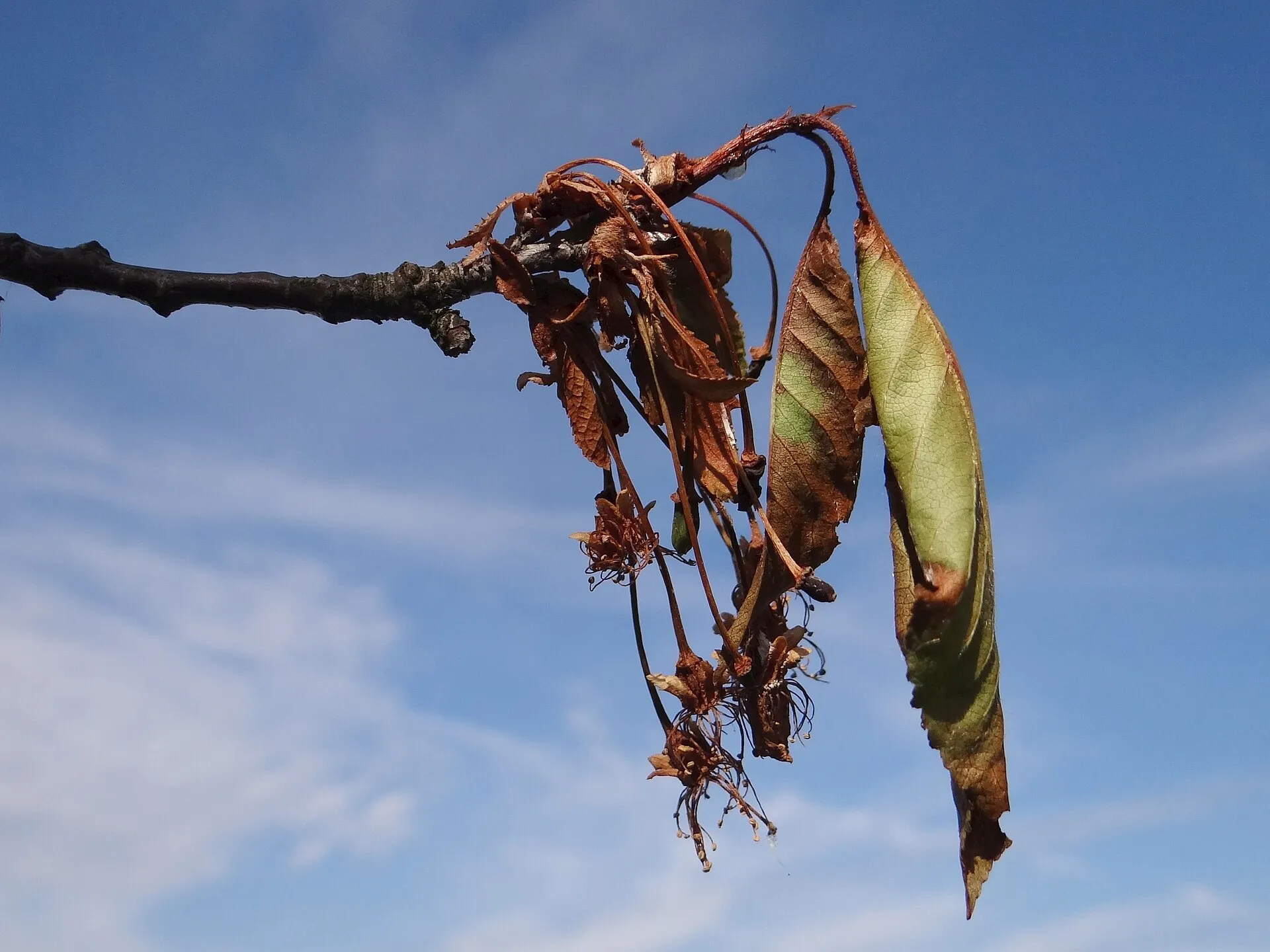
Dead blossom that does not fall, and mummified fruit
In spring the flowers dry up and stay stuck to the twig, often with gum at the base; if the damage rings the shoot, it dies back to the tip. Close to ripeness, the fruit rots with brown spots and grey mould, and many are left mummified on the tree.
All it needs is moisture: rain or dew at flowering and at ripening, its two moments of highest risk. It overwinters in cankers and in mummified fruit. Much fruit is infected in the orchard and only rots afterwards, in the cold store.
How it works
A flight after flowering
1
We fly after the blossom
When the dead flowers and shoots stand out in the canopy.
2
We send you the map
The most affected trees, with their position. It is confirmed up close, because the symptom is small.
3
You clean up and protect
At pruning, you remove dead shoots and mummies from those trees first; and you reinforce the protection where there was the most.
Where it shows up
Where it shows up
- Peach
- Almond
- Cherry
- Apricot
What farmers ask us
Brown rot: your field questions
Why does the fruit rot in the cold store if it was healthy in the orchard?
Because it is infected in the orchard and stays dormant until after harvest. That is why almost everything is decided in the orchard, at flowering and at ripening.
Does removing the mummies help?
Yes. They are the main source of the fungus. Take them off the tree at pruning and pick up the ones on the ground.
When is the risk highest?
At flowering and at ripening, if it rains or there is dew.
Know someone this would help?
Send them this page. If they have brown rot in their fields, you save them some searching.