

Weed · Wheat, barley and oilseed rape (canola)
Blackgrass: see where the seed heads are before they shed
Alopecurus myosuroides
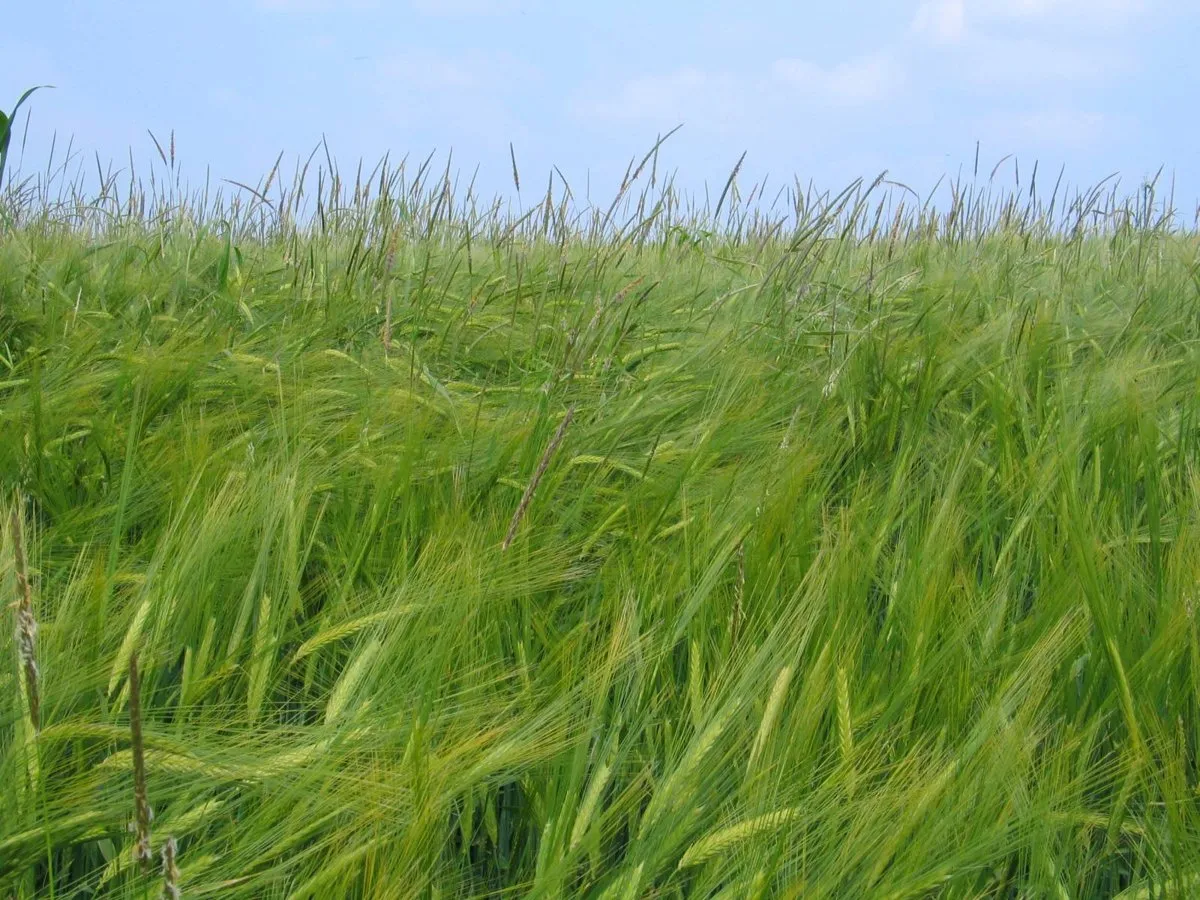
By late spring the seed heads of blackgrass stand above the cereal. A flight at that moment gives you a map of where they are, so you decide the autumn field by field and not by habit.
We have not flown this problem ourselves yet. We work it out with you, on your field.
The problem
A weed that has learnt to survive the spray
Blackgrass is a grass of winter cereals and oilseed rape (canola). Most of the seed germinates in autumn, and the heads show above the crop in May and June. The seed ripens quickly and much of it is shed before harvest, so what you see in June is next year’s weed.
The cost is real: about 12 plants per square metre (roughly one per square foot) are enough to take 5% off the yield, and a population can multiply more than tenfold in a year, so control has to be very high every year just to hold it. On top of that, resistance is the rule: it was first found in 1982, and some degree of resistance is accepted to be present in virtually every English field that is sprayed regularly for it.
How it works
One flight when the heads are visible
1
We would fly in late spring
In the UK, at the end of May and in June, when the heads show above the cereal. In oilseed rape, we tell you once we have seen your field.
2
You get the map
Patches and lines where the heads stand out, with their position and area. We do not say it is blackgrass from the air: we say where something rises above the crop, and you check it on foot.
3
You plan the autumn with it
Which fields and which parts of them carry the seed, where to look first at sowing, and which areas to compare next year.
Blackgrass seed does not last long in the soil, which is its one weakness: several years in a row with little seed returned make a real difference. A map each June shows whether the patches are shrinking.
Where it shows up
Where it matters
- Wheat
- Barley
- Oilseed rape (canola)
Blackgrass is mostly a problem of autumn-sown crops. Spring crops let you control it in other ways, which is a decision for you and your adviser.
What farmers ask us
Blackgrass: your field questions
Do you fly in the UK?
Not yet. In the UK the authority does not recognise foreign registrations, so we do not fly there. Write to us and we will tell you how we can work on your farm. What we do from anywhere is read your soil test and zone your field with satellite data.
Can the drone tell blackgrass from other grasses?
We do not claim that. What you see from above are heads and patches rising over the crop; the species is confirmed on foot. We would fine-tune that with you on your own field.
Is it resistance or did the spray fail?
If the patches come back in the same places despite the same treatment, suspect resistance. Only a test of the seed confirms it, so ask your adviser or a testing service. The map helps because it shows whether the same places repeat.
Which herbicide should I use?
It depends on the crop, and what is authorised changes from year to year. Before you spray, check in your country’s official pesticide register that the product is approved for your crop (in the UK, the HSE register of authorised products; in the US, the label registered with the EPA and your state), or ask us. We do not recommend products.
Does the drone spray?
No. We do not spray: the drone makes the map. Treatment is up to you, with your own ground equipment.
Know someone this would help?
Send them this page. If they have blackgrass in their fields, you save them some searching.