

Disease · Barley, wheat and oats
Barley yellow dwarf: patches that turn yellow
Barley yellow dwarf virus (BYDV)
A virus that aphids bring in autumn and that shows in spring as yellow or reddish patches. We fly the cereal and mark those patches so you can confirm them.
We have not flown this problem ourselves yet. We work it out with you, on your field.
The problem
A virus that arrives with the aphid
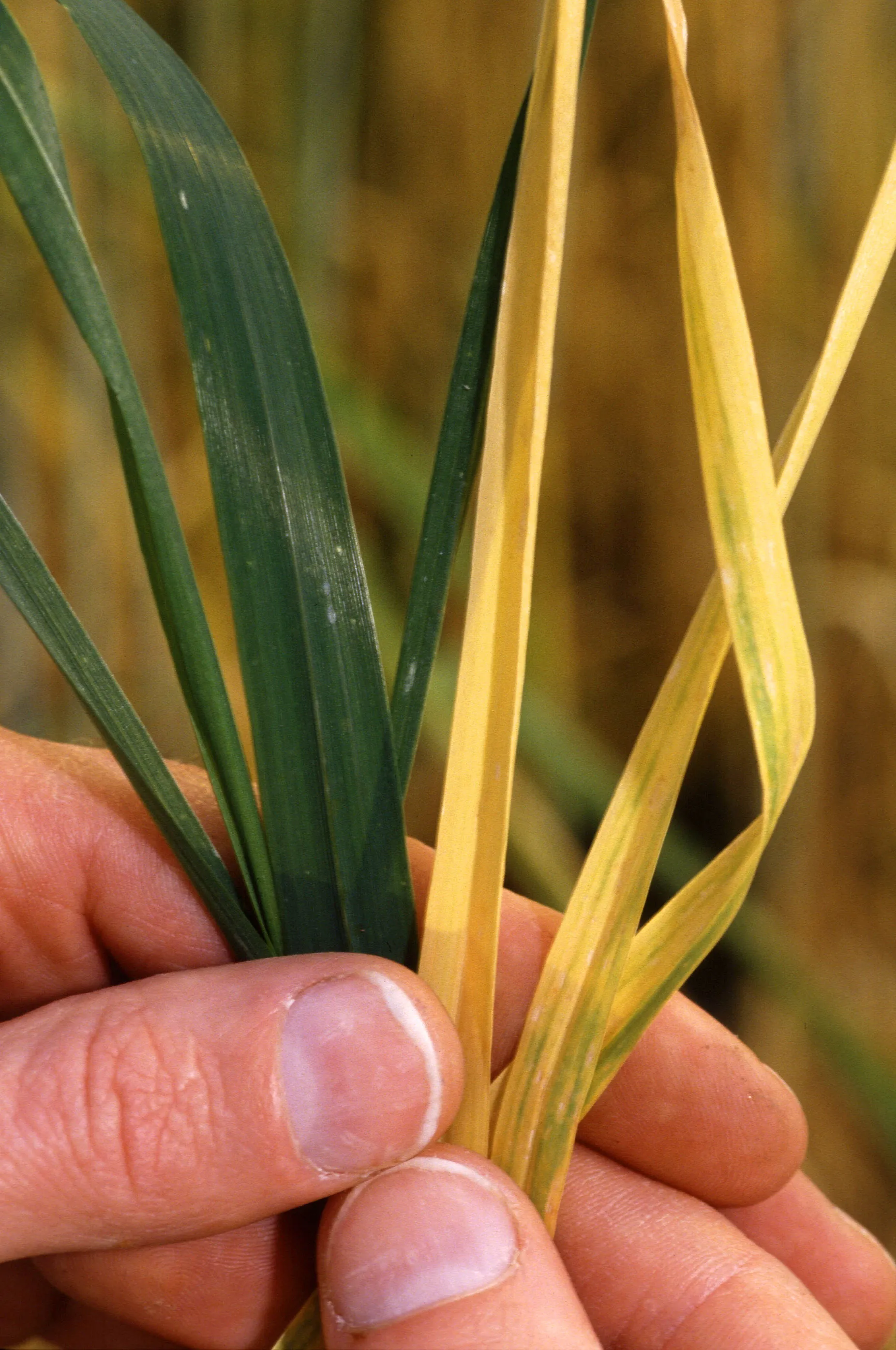
It is spread by several cereal aphids. Leaves turn yellow, red or purple from the tip; barley mainly turns yellow, wheat turns yellow or reddens at the leaf tips, and oats turn red. The plant stays short, tillers less and ripens late.
It usually shows up in patches, not in lines. It survives in volunteer cereals and wild grasses, from where aphids carry it to the new crop.
How it works
A flight when the yellow shows
1
We fly in late winter or spring
When the yellow or reddish patches can already be told apart from the rest of the cereal.
2
We send you the map
Patches with their position and area.
3
It gets confirmed
A yellow patch can also be a lack of fertiliser or another virus. The virus is only confirmed by a laboratory test.
If the patches repeat near field margins with grasses or volunteer cereals, that is where the virus is kept.
Where it shows up
In winter cereals
- Barley
- Wheat
- Oats
What farmers ask us
Barley yellow dwarf: your field questions
Can a fungicide fix it?
No. It is a virus, and fungicides do nothing to it.
How do I avoid it next year?
Do not sow too early if autumn is warm, control volunteer cereals and the grasses on the margins, and choose tolerant varieties, which exist mainly in barley.
Is it virus or lack of fertiliser?
The virus usually shows in patches and a lack of fertiliser is more even. Even so, only a laboratory test confirms it.
Know someone this would help?
Send them this page. If they have barley yellow dwarf in their fields, you save them some searching.