

Disease · Apple
Apple scab: where it bites in the orchard
Venturia inaequalis
It is one of the most important diseases of apple in temperate regions. We fly the orchard and mark the zones with a thinner canopy, where the most leaves have fallen.
We have not flown this problem ourselves yet. We work it out with you, on your field.
The problem
A disease that lives in the fallen leaf
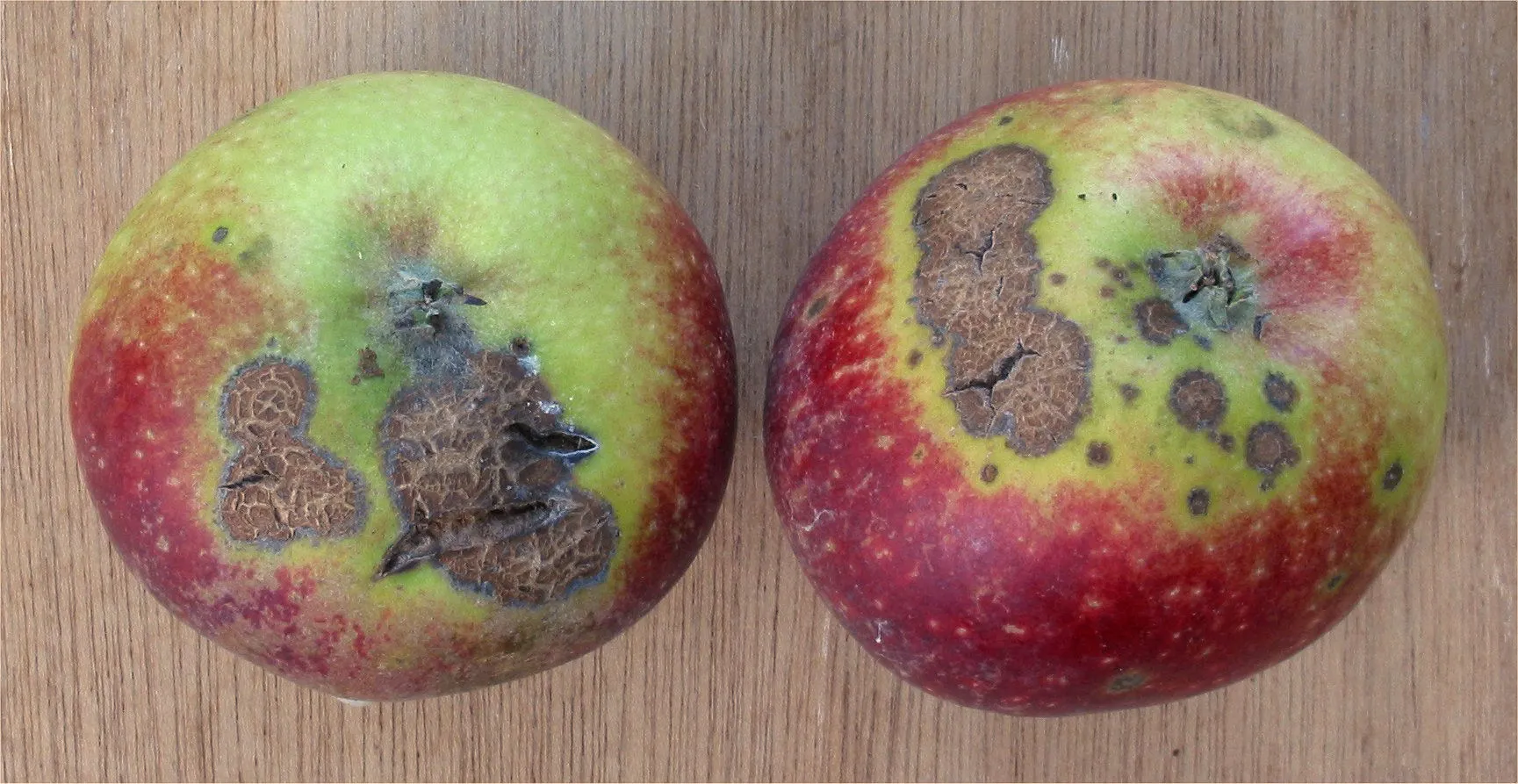
On the leaf, round olive-green spots appear and darken; on the fruit, dark spots that crack and deform it. In a heavy attack, the leaf falls.
It overwinters in leaves that have fallen to the ground. In spring, with rain, it releases spores that infect if the leaf stays wet for several hours: about 8 hours at around 18 °C (64 °F), up to 18 hours at around 7 °C (45 °F). The usual protection means a regular fungicide programme, depending on the year and the area.
How it works
A flight to see the canopy
1
We fly the orchard
In summer, when leaf drop already shows in the canopy.
2
We send you the map
Zones with a thinner canopy. It is only useful if the orchard had a heavy attack: the spots on the leaf cannot be seen from the drone, only the leaf that has already fallen.
3
You adjust
More scouting and protection in those zones next season, and shredding the fallen leaves where there were most.
Where it shows up
Where it appears
- Apple
In temperate, humid apple-growing regions. The main commercial varieties are very susceptible.
What farmers ask us
Apple scab: field questions
When do I scout?
From bud break, every time it rains and the leaf stays wet for several hours.
Is it worth clearing the leaves from the ground?
Yes: that is where the fungus overwinters. Shredding them lowers the infection the following spring.
How do I know when to spray?
With risk models that use rain, leaf-wetness hours and temperature. They sometimes let you spray less often.
Know someone this would help?
Send them this page. If they have apple scab in their fields, you save them some searching.